
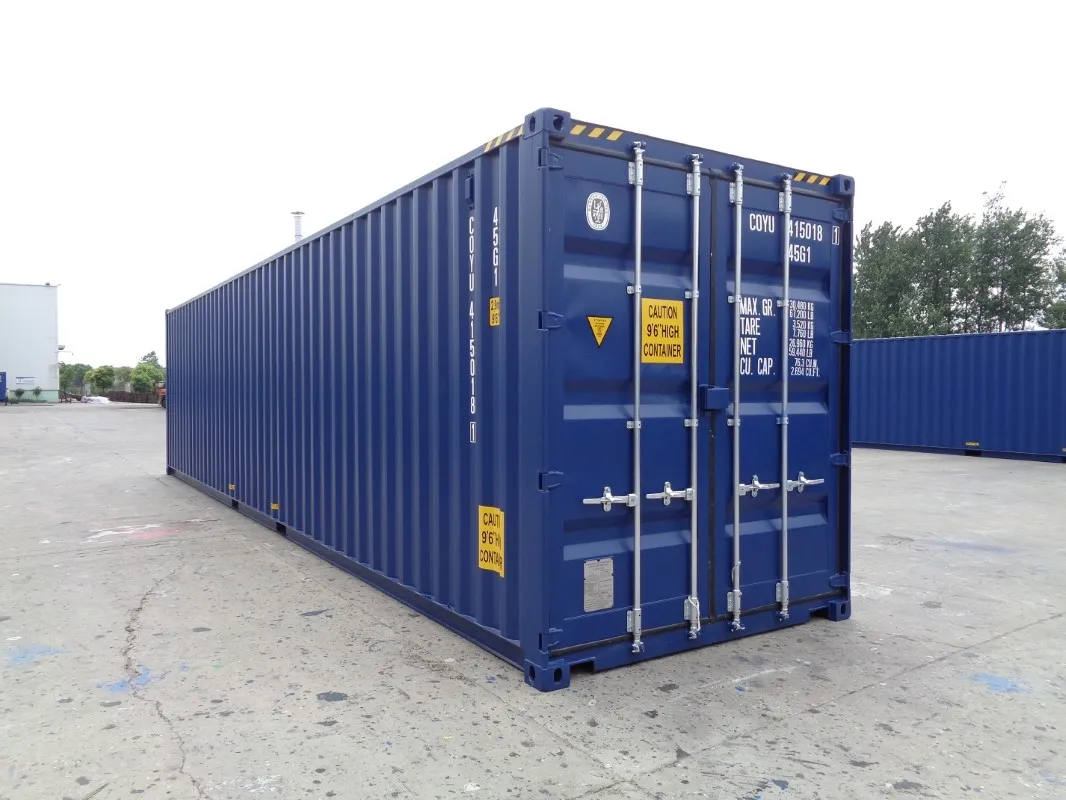
40ft High Cube Container Dimensions
Shipping Containers of London supplies 40ft high-cube containers for commercial storage, large-scale industrial use, and major modular conversion projects throughout Greater London and the surrounding transport corridors. A 40ft high cube shipping container stands as one of the most efficient large-capacity logistical assets in the UK fleet. While retaining the identical ground footprint of a standard 40ft unit, it provides an additional foot of vertical headroom. This structural design expands the internal cubic storage volume, allowing operations to maximise vertical space when handling high-volume inventory or tall machinery.
40ft High Cube External Dimensions
The external measurements dictate the physical perimeter required on your site or transport bed. You must evaluate these boundaries to ensure a delivery vehicle can navigate and position the unit safely.
| Measurement | Metric | Imperial |
|---|---|---|
| Length | 12,192mm | 40ft 0in |
| Width | 2,438mm | 8ft 0in |
| Height | 2,896mm | 9ft 6in |
Standard containers have an external height of 8ft 6 in. The 9ft 6in profile of a high cube demands comprehensive route checking across London to account for low bridges, narrow overhanging urban structural canopies, and low tree branches.
40ft High Cube Internal Dimensions
The interior clearance determines the practical volumetric capacity available for racking, building materials, or structural modifications. Corrugated steel panels and structural framework components slightly reduce the inner space relative to the outer shell dimensions.
| Measurement | Metric | Imperial |
|---|---|---|
| Internal Length | 12,032mm | 39ft 5in |
| Internal Width | 2,352mm | 7ft 9in |
| Internal Height | 2,698mm | 8ft 10in |
An internal height of 2,698mm enables logistics managers to stack pallets higher, maximising transport efficiency. This overhead clearance also makes the unit excellent for building site offices, split-room workshops, and retail structures, as it provides comfortable headroom after installing standard subfloors, insulation layers, and ceiling panels.
Weight Specifications and Structural Capacities
Reviewing structural weight limits ensures safety compliance during lifting, loading, and transit. These details are stamped on the data plate on the unit’s rear door.
- Tare Weight: 3,900kg (The base unladen weight of the empty steel container).
- Maximum Payload: 26,580kg (The maximum cargo weight the internal floor structure can support).
- Maximum Gross Weight: 30,480kg (The total maximum weight of the container combined with its internal contents).
- Internal Cubic Capacity: 76.2 cubic metres / 2,694 cubic feet (Providing roughly 12% more storage volume than a standard 40ft unit).
Applications for 40ft High Cube Containers
Commercial and industrial businesses across London use these high-volume units to manage volatile inventory needs or complex building projects. Common applications include:
- Bulk Commercial Storage: Providing secure warehouse overflow space for raw materials, manufacturing components, and seasonal retail stock.
- Self-Storage Developments: Expanding operational volume inside professional storage yards to accommodate large household or business moves.
- Industrial Equipment Housing: Securing long, tall plant machinery, generator sets, plumbing infrastructure, and scaffolding systems.
- Modular Conversions: Forming the structural basis for multi-room site offices, training facilities, catering units, and creative pop-up event spaces.
- International Freight: Exporting large-scale commercial cargo through major UK shipping terminals using standardised global transport systems.
If you need to hire storage containers for domestic or commercial projects or want to review standard alternatives, you can check our technical specifications for 40ft container dimensions before making a final selection.
Delivery Constraints and Site Requirements
We deliver these large units using a multi-axle articulated lorry equipped with a hydraulic HIAB crane. The vehicle requires a substantial turning radius and a flat, clear path to execute the drop safely. Misjudging the site layout can result in expensive failed-delivery charges from the haulier.
The transport vehicle requires a minimum travel clearance of 3.2 metres and a vertical clearance of 4.2 metres to navigate gates, tunnels, and low bridges. During offloading, the crane extends outward to position the container. The operator requires up to 10 metres of vertical overhead clearance. The entire delivery path and drop zone must remain completely clear of low overhead power lines, building eaves, phone lines, and mature tree limbs.
The positioning surface must be flat, level, and solid to distribute the weight evenly. Suitable surfaces include dry compacted gravel, concrete pads, or asphalt. We can also place the corner posts onto solid timber rail sleepers. Soft ground, uncompacted mud, loose grass, or sand will cause the vehicle and container to sink. This shifts the steel frame out of alignment, twisting the door frames and preventing the lock rods from turning properly. Review our full delivery guidelines to prepare your site before transit.
Frequently Asked Questions
What is the exact height difference between a standard 40ft container and a 40ft high cube?
A 40ft high cube container is exactly 1 foot taller than a standard container. A standard unit stands at an external height of 8ft 6 in, while a high cube features an external height of 9ft 6 in. This profile increases the total internal capacity by approximately 300 cubic feet. You can check alternative options on our comprehensive faqs page.
Can 40ft high cube containers be stacked safely on top of each other?
Yes, these units feature standard ISO corner castings on all eight corners, allowing them to stack securely. When stacking units for commercial storage or modular building frameworks, you must use heavy-duty twist locks at each corner to secure the containers. The ground surface must also be completely level to ensure even vertical weight distribution across the corner posts.
How do you manage moisture and condensation inside a 40ft high cube container?
Rapid temperature changes can cause moisture to condense on internal steel surfaces. To protect cargo, we install small passive air vents in the upper side walls to promote steady cross-flow. For sensitive goods, paper records, or electronic equipment, we can apply an internal anti-condensation lining or add full insulation panels to regulate temperatures and eliminate dampness completely.