
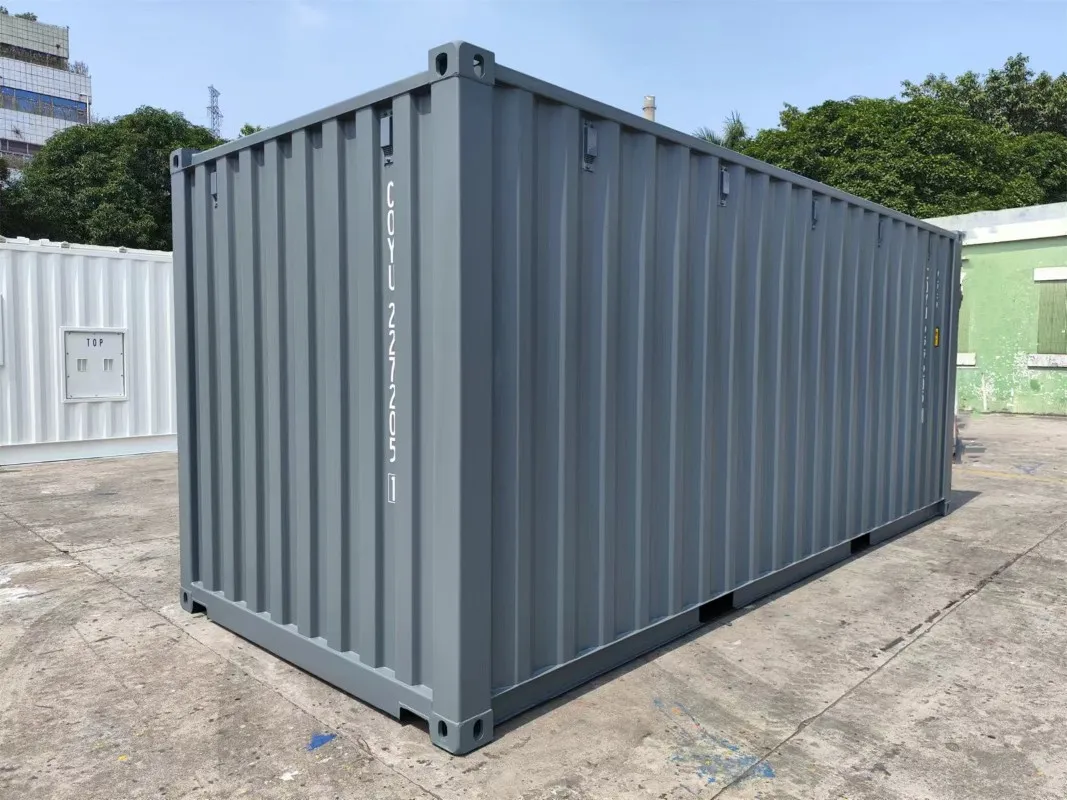
20ft High Cube Container Dimensions
Shipping Containers of London supplies 20ft high cube containers for commercial storage, export shipping, and modular conversion projects throughout Greater London and the surrounding counties. A 20ft high cube container provides the same floor footprint as a standard 20ft unit but offers an extra foot of external vertical clearance. This additional height expands the total internal cubic capacity, making these units highly effective for stacking tall cargo, installing commercial racking systems, or creating comfortable workspace conversions.
20ft High Cube External Dimensions
The external measurements determine the unit's total physical footprint and overhead space on your site. You must ensure your designated delivery area handles these precise boundaries cleanly.
| Measurement | Metric | Imperial |
|---|---|---|
| Length | 6,058mm | 20ft 0in |
| Width | 2,438mm | 8ft 0in |
| Height | 2,896mm | 9ft 6in |
When planning site layouts across London, remember that standard containers are 8ft 6 in tall. The 9ft 6 in height of a high cube requires extra care with low-hanging tree branches, overhead structural beams, and low bridges during transport.
20ft High Cube Internal Dimensions
The interior clearance determines the actual usable volume for your stock, machinery, or structural builds. Steel walls and corner posts reduce the internal space slightly compared to the outer shell.
| Measurement | Metric | Imperial |
|---|---|---|
| Internal Length | 5,898mm | 19ft 4in |
| Internal Width | 2,352mm | 7ft 9in |
| Internal Height | 2,698mm | 8ft 10in |
The internal clearance height of 2,698mm allows plant operators to store tall machinery upright. It also provides sufficient headroom to install ceiling insulation, electrical trunking, and ventilation panels without creating a cramped environment inside conversion projects.
Weight Specifications and Storage Capacities
Understanding the structural weight constraints ensures safe handling and compliance during lifting and transport. Every unit features a standard manufacturer data plate detailing these limits.
- Tare Weight: 2,315kg (The unladen weight of the empty steel structure).
- Maximum Payload: 28,165kg (The maximum weight of cargo or equipment you can safely load inside).
- Maximum Gross Weight: 30,480kg (The total combined weight of the container and its internal contents).
- Internal Cubic Capacity: 37.4 cubic metres / 1,322 cubic feet (Providing roughly 11% more storage volume than a standard 20ft unit).
Practical Applications in Greater London
Commercial sectors across the capital use these high-capacity units to solve complex logistical and spatial challenges. Common applications include:
- Construction Site Storage: Securing tall plant machinery, scaffolding towers, and bulk building materials on secure central London sites.
- Commercial Stock Management: Stacking palletised retail inventory or archiving business documents using vertical racking systems.
- Bespoke Container Conversions: Building functional site offices, workshops, welfare units, and pop-up retail spaces with adequate ceiling clearance.
- International Freight: Transporting oversized cargo that exceeds the interior height limits of standard transport equipment.
If you want to buy shipping containers for international logistics or hire storage containers for domestic commercial projects, we assess your site requirements to ensure a smooth deployment.
Delivery Constraints and Site Preparation
We deliver your unit using a specialised lorry equipped with a hydraulic HIAB crane. The driver unloads the container from the side of the vehicle bed onto your prepared ground surface. To avoid failed delivery charges, your site must meet specific physical conditions.
The delivery vehicle requires a minimum travel clearance of 3.2 metres and a vertical clearance of 4.2 metres to navigate gates and archways safely. When the crane extends to lift and position the container, the operator requires up to 10 metres of vertical overhead clearance. You must ensure the drop zone is completely clear of low overhead power cables, overhanging trees, and building soffits.
The ground surface must be completely flat, level, and solid. We can position units onto dry compacted gravel, concrete pads, tarmac, or timber rail sleepers. Soft mud, loose grass, and uncompacted dirt cause the vehicle and the container to sink, which prevents safe door operation. Review our detailed delivery guidelines to check your site access before transport commences.
Frequently Asked Questions
What is the exact height difference between a standard container and a high cube?
A high cube container is exactly 1 foot taller than a standard container. A standard unit features an external height of 8ft 6 in, whereas a high cube stands at 9ft 6 in, providing extra vertical storage on the same ground footprint. You can browse alternative sizes on our comprehensive faqs page.
Can I use a 20ft high cube container for international maritime export?
Yes, we supply one-trip new builds and high-quality used high-cube units with valid CSC certification. The International Convention for Safe Containers plate verifies that the container's structural integrity meets safety standards for global shipping lines. We make sure your chosen unit complies with all international transport rules before it leaves our depot.
How do you prevent condensation from forming inside a high cube container?
Extreme temperature shifts can cause moisture to collect on internal steel walls. To protect moisture-sensitive stock, we install small passive air vents to encourage steady cross-flow ventilation. For maximum protection, you can opt for an internal anti-condensation lining, or we can apply an insulation treatment during the build process to stop dampness entirely.